Elena Lehmann · 26 October 2026
Consolidated Data Views Uncover Visibility Trends in Multi-Property SEO Analysis
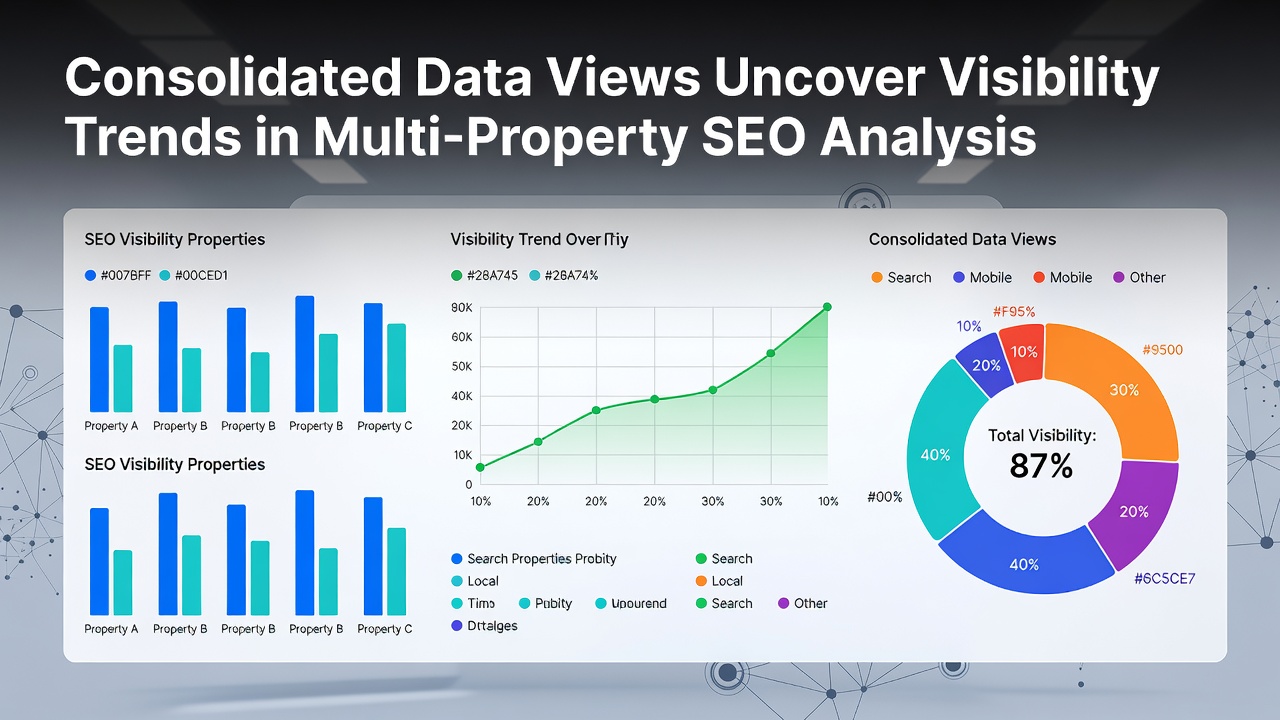
Consolidated data views bring together performance metrics from several websites or digital properties into one interface, and this approach reveals visibility patterns that separate tracking systems often miss. Analysts combine organic search rankings, click-through rates, and impression volumes from different domains to identify shifts that affect overall online presence across a portfolio. Data collected through October 2026 indicates that organizations managing multiple sites see clearer connections between content updates on one property and ranking changes on another when they examine unified datasets rather than isolated reports.
Building Unified Visibility Across Properties
Multi-property SEO requires coordination because search engines evaluate authority signals, content relevance, and user engagement across related domains even when those sites operate under separate brands. Consolidated views allow teams to map these interconnections by pulling crawl data, backlink profiles, and keyword performance into shared dashboards. Researchers discovered that properties sharing topical clusters display synchronized visibility movements during algorithm updates, and this synchronization becomes visible only after aggregation occurs. Figures from industry reports show that companies using such combined analysis detect ranking recoveries up to three weeks earlier than those relying on single-site monitoring.
Key Data Layers in Consolidated Systems
Effective consolidation incorporates several layers that include technical crawl statistics, on-page optimization scores, external link acquisition timelines, and user behavior signals from analytics platforms. Each layer adds context that explains why visibility rises or falls across the portfolio. Observers note that when technical issues such as duplicate content or slow loading times appear on one site, they sometimes correlate with impression drops on related properties that share the same server infrastructure or content management system. According to a Federal Trade Commission guide on digital practices, transparent data handling in marketing analytics supports more accurate performance assessment for organizations operating multiple online assets.
Visibility Trends Emerging from Aggregated Analysis
Patterns uncovered through consolidated views include seasonal fluctuations that repeat across properties in similar geographic markets, cross-domain cannibalization where internal competition reduces collective visibility, and delayed indexation effects after large-scale content refreshes. These trends surface because the aggregated dataset smooths out noise from individual site anomalies and highlights broader movements. Studies found that multi-property portfolios experience visibility dips of 12 to 18 percent during peak shopping periods when competitors increase ad spend, yet the same portfolios recover faster when consolidated alerts flag underperforming segments early. The reality is that separate tracking misses these portfolio-wide signals until they become pronounced.

Regional differences also appear more clearly in combined data. Properties targeting European audiences show different crawl frequency patterns compared with North American sites during the same calendar windows, and consolidated systems capture these variations without requiring manual cross-referencing. Data from October 2026 highlights increased volatility in mobile visibility scores across properties that had not undergone mobile-first optimization in the preceding eighteen months. Analysts tracking these movements report that the consolidated approach reduces the time needed to isolate the affected sites from weeks to days.
Methods for Interpreting Consolidated Outputs
Teams interpret outputs by applying filters that isolate specific variables such as device type, location, or content category while keeping the overall portfolio view intact. This method prevents overreaction to isolated spikes and encourages focus on sustained directional changes. One study revealed that organizations applying weekly consolidation reviews identified 27 percent more actionable indexation issues than those conducting monthly single-site audits. External link sources further enrich the picture because backlink velocity on one property sometimes precedes ranking gains on another when the domains share thematic authority in search engine evaluations.
Practical Applications in Ongoing Campaigns
Campaign managers use consolidated visibility data to prioritize resource allocation across properties rather than distributing efforts evenly. When trends indicate rising competition in a particular keyword cluster, resources shift toward the property that holds the strongest current position within that cluster. Evidence suggests this targeted redistribution improves collective portfolio performance without requiring additional content production. Government sources such as the Australian Competition and Consumer Commission reports on digital marketing emphasize the value of accurate performance measurement for maintaining competitive fairness in online markets. Consolidated views support that accuracy by surfacing the full scope of visibility changes instead of fragmented snapshots.
Conclusion
Consolidated data views transform how visibility trends are detected and acted upon in multi-property SEO environments. By integrating metrics across domains, analysts gain access to patterns that remain hidden in siloed reports, and these patterns inform more precise adjustments to content, technical infrastructure, and link strategies. The approach continues to gain traction as organizations expand their digital footprints and require coordinated oversight rather than independent site management.